

How It Works
How our engineered mesh matrix exploits the laws of thermodynamics to deliver maximum thermal efficiency with near-zero physical mass.
The Mesh Topology
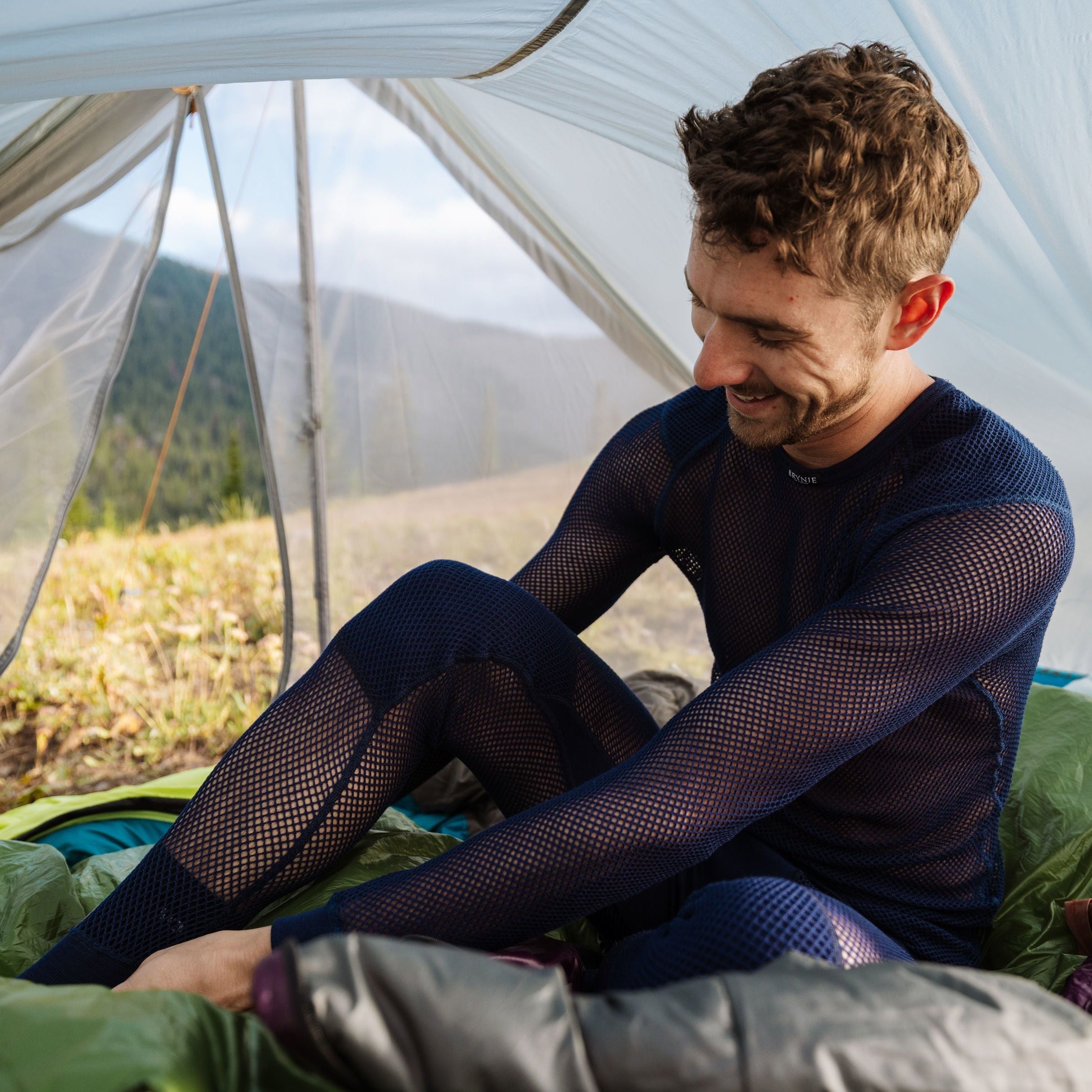
Traditional fabrics rely on heavy fibers to trap heat. Our open-weave framework uses a low-density geometric matrix to create stand-off. This geometric construction minimizes material weight while maximizing the volume of spatial voids designed to capture surrounding air elements.
Stagnant Air Microclimate
Air possesses incredibly low thermal conductivity, making it an elite insulator—but only if it is stopped from moving. The mesh effectively immobilizes a thin layer of air right against your skin, creating a warm, protective microclimate buffer.
Vapor Evaporative Cooling
When your physical output increases, moisture vapor needs to escape to prevent rapid heat loss via wet conduction. The micro-perforations act as high-permeability exhaust paths, allowing moisture to diffuse outward into the environment instantly.
Convective vs. Conductive Heat Transfer
To achieve maximum comfort across fluctuating temperatures, a garment must balance the thermal dynamics of your body's energy output. Heavy, solid layers fail because they trap sweat, which accelerates conductive heat transfer (making you feel freezing cold the moment you stop moving).
By establishing a high-loft, porous mesh boundary, the fabric arrests convective air movement (preventing cold air currents from stripping away your warmth) while retaining an incredibly high Moisture Vapor Transmission Rate (MVTR).
